
Dental AI startup ideas get much more interesting when founders stop pitching "AI for dentists" and start selling a narrower operating promise: diagnostic consistency across providers, locations, and treatment-plan conversations.
The June 16 SkimHQ dentistry archive pointed in that direction. The strongest technology signal was not a generic chatbot, and it was not another claims or recall workflow. It was Smile Brands selecting Pearl as its dental AI partner after a multi-vendor evaluation, with the stated goal of scaling diagnostic clarity and clinical consistency across a 600-location DSO network.
That matters because dental AI is leaving the demo lane. DSOs and multiprovider clinics are not buying novelty; they are buying a way to reduce variation in how radiographs are read, how treatment options are explained, and how clinical confidence travels from one chair to the next. For founders, diagnostic consistency is the wedge.
Why diagnostic consistency is the real buyer pain
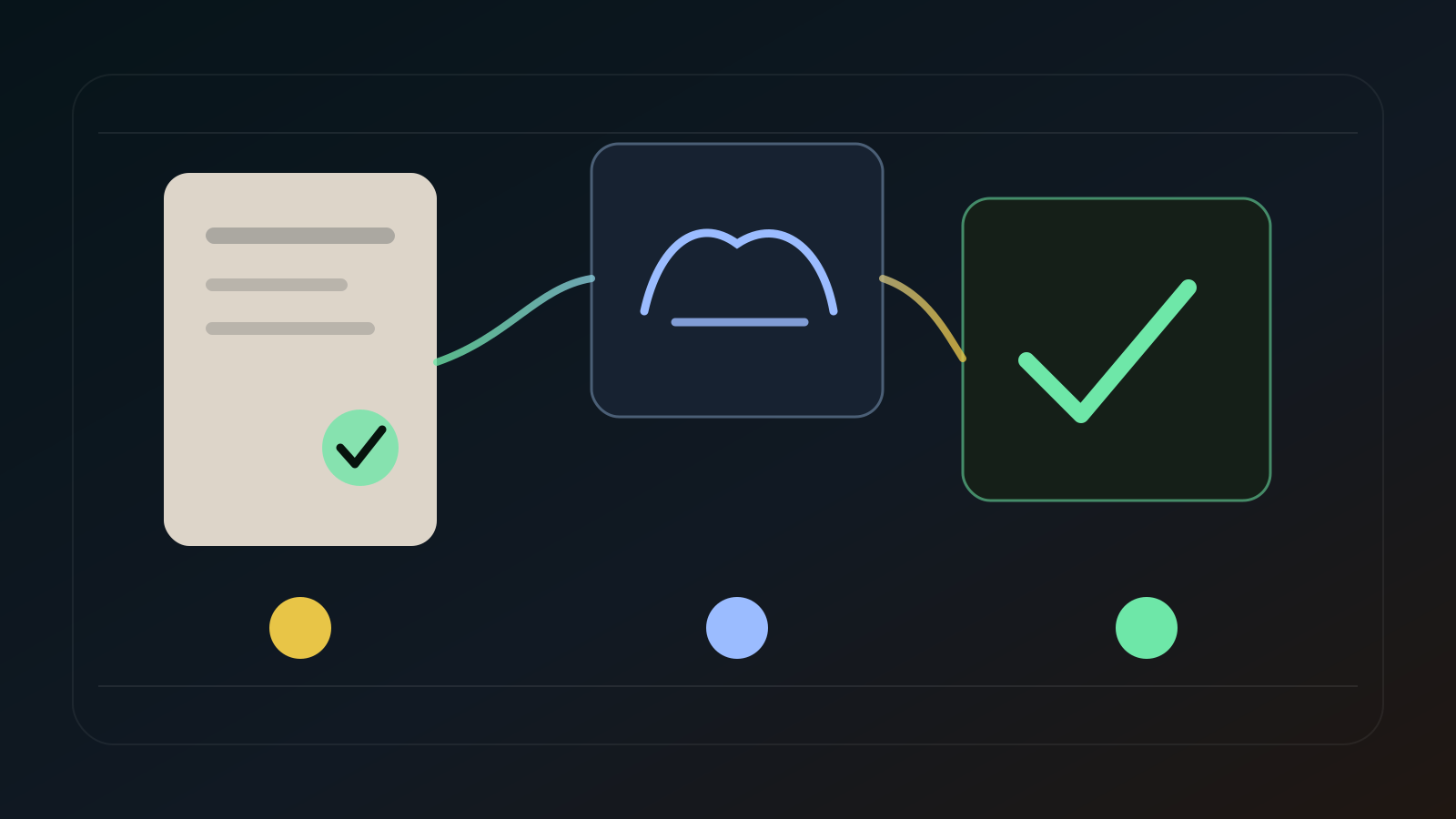
Dental Economics framed the problem bluntly in its June 12, 2026 treatment-planning article: two dentists can view the same radiographs and still land on different plans. The article ties that variability to patient confusion, trust, case acceptance, and practice performance. That is not just a clinical nuance. It is an operating problem with a budget attached.
A solo clinic can sometimes absorb variation as "style." A DSO cannot. Once a group runs dozens or hundreds of locations, inconsistent interpretation becomes a management problem: providers need calibration, patients need clearer explanations, and the business needs enough system-level visibility to know whether standards are improving.
That is why the Smile Brands/Pearl news is useful as startup evidence. Pearl is being positioned less like a novelty detector and more like infrastructure for consistency: radiographic AI inside the imaging workflow, clinical calibration across offices, and system-level visibility into trends. PDS Health made a similar Pearl move earlier in 2026 across more than 1,100 dental practices, citing diagnostic consistency and enterprise clinical insight as the point.
The founder read is not "copy Pearl." That would be lazy and probably late. The useful read is that large dental buyers are now naming consistency as an enterprise requirement. That creates room for adjacent tools, services, data products, and workflow layers around adoption.
The June 16 archive signal stack
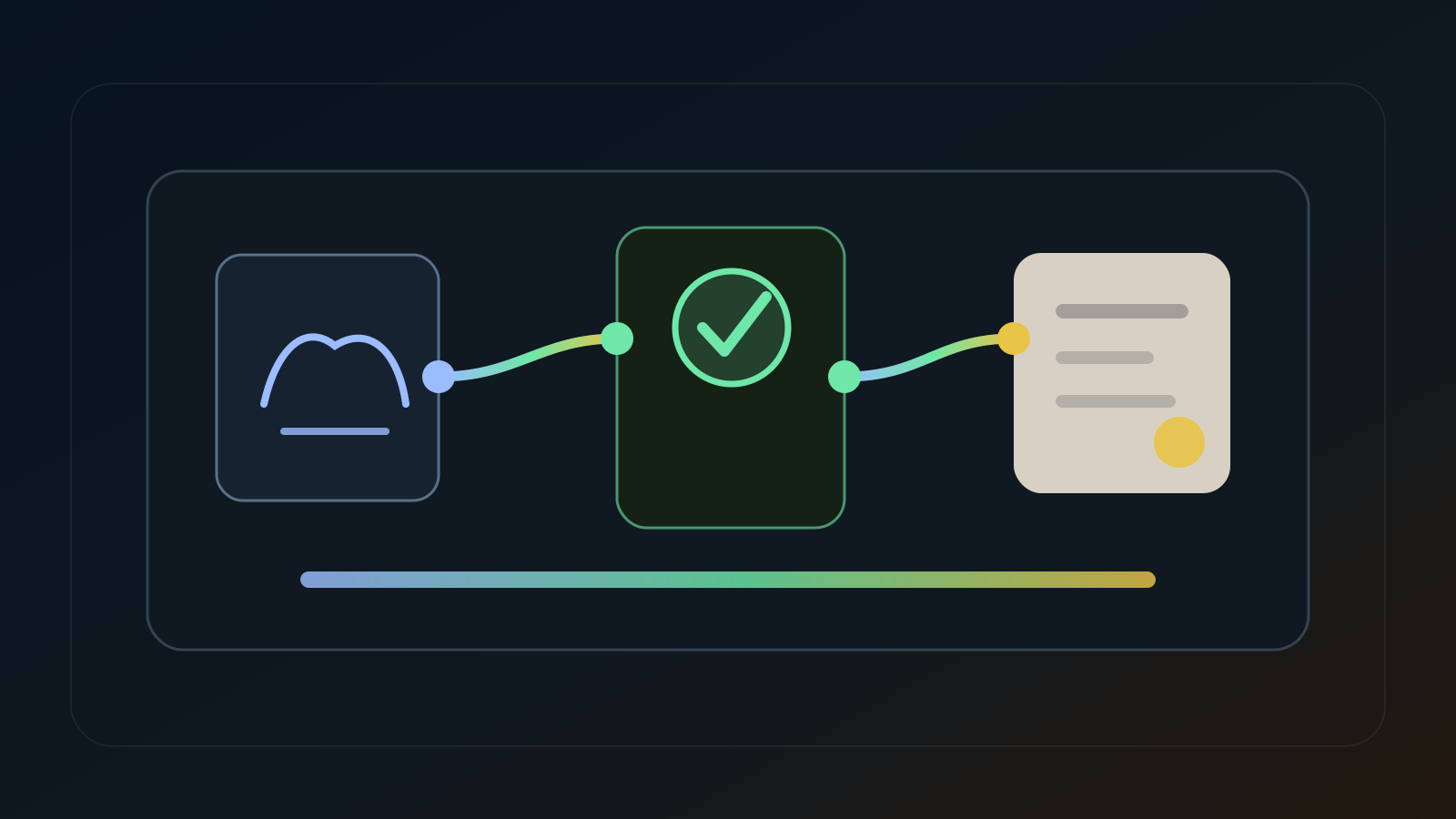
The June 16 archive had four relevant dentistry winners. The first was Premier Dental's Bond-PR launch, a product signal about simplifying restorative workflows and making adhesion more predictable across substrates. The second was Smile Brands selecting Pearl. The third was the Dental Economics treatment-planning article. The fourth was a Journal of Prosthetic Dentistry article, indexed on PubMed on June 15, 2026, about abutment screw channel angle, crown height, and posterior monolithic zirconia crown stability.
The June 16 archive had four relevant dentistry winners.
Those signals look scattered until you read them through the same lens: dentistry keeps rewarding tools that reduce avoidable variation. Materials vendors are selling predictable clinical outcomes. DSOs are buying diagnostic standardization. Clinical journals are still pushing edge-case specificity. The founder opportunity sits where those pressures meet.
Four dental AI startup ideas inside the consistency wedge
None of these require pretending to be the diagnostic AI itself. In fact, the better wedge may be the layer that helps clinics implement, audit, and commercialize the AI they are already considering.
1. DSO diagnostic calibration reports
Large dental groups need to know whether AI is actually reducing provider-to-provider variation. A calibration product could compare diagnosis presentation, treatment-plan patterns, radiograph annotations, and follow-up actions across locations. The first version can be a service: pull a sample of recent cases, anonymize them, score variance, and give the COO a monthly consistency report.
Buyer: DSO clinical leadership or regional operations. First test: run a 30-day audit for five clinics using exported case data and ask whether leadership would pay for a recurring calibration dashboard.
2. Treatment-plan second-look workflow
Treatment planning is where diagnostic interpretation becomes money, trust, and scheduling. A second-look workflow can route complex or high-value cases through an AI-assisted checklist before presentation: missing radiographs, inconsistent perio notes, competing plan options, or unclear patient-facing rationale.
This is not a replacement for the dentist. It is a pre-presentation quality layer. That distinction matters for safety, trust, and sales.
3. Patient-facing visual evidence packets
Pearl and similar systems make findings more visible at chairside. A founder can build around the next step: turning diagnosis evidence into a plain-language packet that patients can understand after they leave the chair. The job is not "education content." The job is helping a clinic explain why a recommendation is consistent, documented, and worth acting on now.
Kill signal: if clinics only want generic brochures, stop. The product is only interesting if they want packets tied to real findings, real treatment options, and real acceptance outcomes.
4. AI adoption ops for dental groups
Enterprise AI rollouts do not fail only because the model is wrong. They fail because workflows do not change. Someone has to train providers, document adoption, identify offices that are not using the tool, and connect usage to case acceptance or clinical quality metrics. That can start as a consulting wedge and become software after the repeated checklist is obvious.
This is probably the fastest founder path because it sells expertise before code. The first deliverable is a rollout playbook, not a platform.
LIKE WHAT YOU'RE READING?
The digest delivers 3–5 scored business ideas every morning — graded, sourced, and ready to act on.
How to validate the idea without becoming a dental AI company
Start with the operational buyer, not the model. Message DSO clinical directors, multi-location owners, and practice operations leads with one concrete question: "Where do treatment recommendations vary most across providers?" If they cannot name a specialty, location cluster, or case type, the pain is too fuzzy.
Start with the operational buyer, not the model.
Then ask for artifacts. Redacted treatment plans. Calibration meeting notes. Case acceptance reports. Patient education templates. Provider onboarding materials. A founder who sees the artifacts will find the product shape faster than a founder who asks, "Would you use AI?"
- Week 1: interview ten multi-provider dental operators and collect the workflows they use to calibrate diagnosis and treatment plans today.
- Week 2: manually audit 25 redacted cases from one specialty, then deliver a consistency report with the three most common variation points.
- Week 3: charge for the second report. If nobody pays, the pain is interesting but not urgent.
Where this differs from other dental posts
SkimHQ has already covered dental practice ideas in Europe, recall systems, dental insurance claims, and broader clinic admin workflows. Those are admin and revenue-cycle opportunities. This post is about clinical operating consistency.
That distinction changes the buyer, proof, and risk. Recall tools sell recovered appointments. Claims tools sell recovered cash. Diagnostic consistency tools sell reduced variation, clearer patient communication, and better group-level clinical visibility. The claims have to be tighter. The workflow has to respect clinician accountability. The wedge has to be specific enough that a founder can test it without wandering into unsafe medical promises.
The founder takeaway
The boring version of dental AI is another wrapper that says it helps dentists "work smarter." Skip it. The useful version names a measurable gap: provider A and provider B do not always interpret, explain, or package the same evidence the same way.
The boring version of dental AI is another wrapper that says it helps dentists "work smarter." Skip it.
That is painful for patients, awkward for clinicians, and expensive for dental groups trying to scale a standard of care. It is also narrow enough for a founder to test manually. Diagnostic consistency is not the whole dental AI market. It is the part with a buyer, a source-backed reason to care, and a first wedge that does not require building Pearl.
You read 12 newsletters. You act on zero.
SkimHQ turns source signals into scored startup ideas, buyer logic, first tests, and kill signals before another shiny category steals your week.
Want more archive-backed opportunities like this? Subscribe to SkimHQ for evidence-scored startup ideas with buyer logic and a first test attached.
Subscribe now